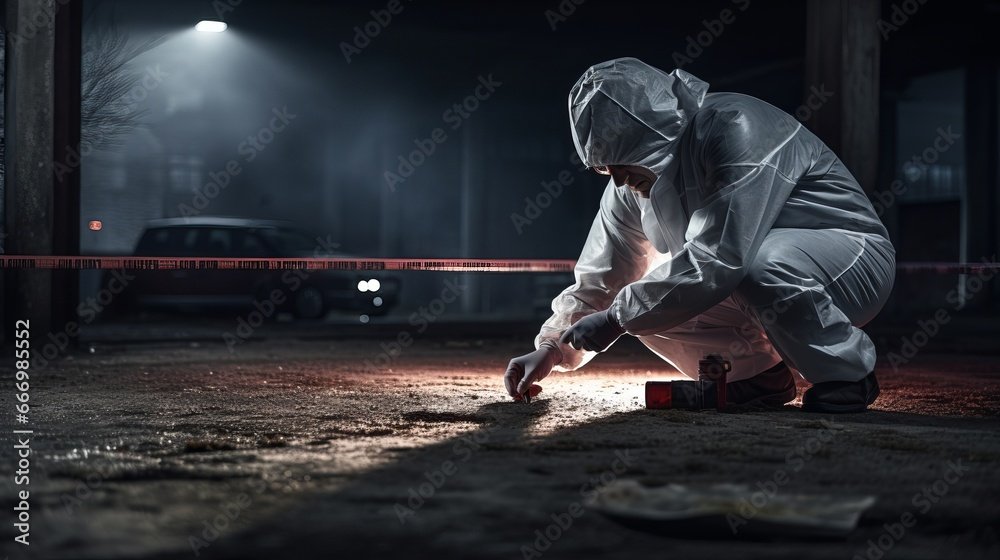
Imagine a world where crimes leave behind a silent language, waiting patiently for skilled interpreters to reveal their truths. Every dropped item, every stray hair, every digital whisper at a crime scene isn't just debris—it's a message, a clue left for those who know how to listen. This is the realm of The Investigation & Forensic Evidence, where science and meticulous detective work converge to transform suspicion into undeniable fact, theory into conclusion, and ultimately, to serve justice.
It's a complex, fascinating field that underpins our legal system, turning the chaotic aftermath of an event into a precise narrative. From the smallest fiber to the largest digital footprint, forensic evidence provides the objective, irrefutable details that eyewitnesses might miss or misremember.
At a Glance: What You'll Discover About Forensic Evidence
- It's More Than DNA: While DNA is powerful, forensic evidence encompasses a vast array of physical, biological, digital, and pattern clues.
- Integrity is Everything: For evidence to be useful in court, it must be legally obtained, scientifically analyzed, and meticulously preserved with an unbroken chain of custody.
- Every Contact Leaves a Trace: Locard's Exchange Principle is a cornerstone—it means that anyone entering or leaving a crime scene will leave something behind and take something with them.
- Science is the Interpreter: Forensic scientists use specialized techniques to analyze clues, revealing identities, reconstructing events, and establishing critical links.
- It Guides Justice: Forensic evidence can identify suspects, clear the innocent, corroborate or refute testimonies, and provide crucial insights into what truly happened.
The Unseen Storyteller: What is Forensic Evidence?
At its heart, forensic evidence refers to any physical or digital item, or piece of information, that is scientifically analyzed to establish facts relevant to a legal investigation. It's the scientific backbone of criminal and civil cases, moving beyond speculation to provide concrete answers. Think of it as a silent witness, always present, never lying, but only speaking its truth to those who understand its language.
The power of this evidence lies in its objectivity. Unlike human testimony, which can be influenced by fear, memory, or bias, physical evidence tells a consistent story, provided it’s handled correctly. It builds bridges between victims, suspects, and crime scenes, painting a clearer picture of events that might otherwise remain shrouded in mystery.
The Foundation of Trust: Validity, Legality, and the Chain of Custody
For any piece of forensic evidence to hold weight in a courtroom, it must pass rigorous scrutiny. It's not enough for evidence to simply exist; it must be:
- Legally Obtained: Any evidence acquired through illegal means (e.g., searches without a warrant where one is required) can be deemed inadmissible, no matter how convincing it seems.
- Scientifically Analyzed: The analysis must be conducted by qualified experts using validated scientific methods, ensuring accuracy and reliability.
- Properly Documented and Preserved: This is where meticulousness truly matters. From the moment it's found, every piece of evidence must be documented (photographed, sketched, described), collected using appropriate tools, and stored in conditions that prevent degradation or contamination.
Crucially, maintaining a strict chain of custody is non-negotiable. This means creating an unbroken record of every individual who has handled the evidence, along with the dates and times of transfer. Think of it as a meticulously signed passport for every piece of evidence. Any break or unexplained gap in this chain can cast doubt on the evidence's integrity, potentially rendering it inconclusive or even inadmissible in legal proceedings. This commitment to detail ensures that the evidence presented in court is the same evidence found at the scene, untampered and reliable.
Deciphering the Clues: A Guide to Forensic Evidence Types
The world of forensic evidence is incredibly diverse, encompassing everything from a microscopic fiber to vast databases of digital information. Each type offers a unique window into an event, building layers of information that, when combined, create a compelling narrative.
Physical Evidence: The Tangible Truth
This is perhaps the most intuitive type of evidence: any tangible object that can be touched, observed, or quantified. Physical evidence is objective; it can't forget, it can't lie, and it doesn't change its story.
- Examples: Weapons (a knife, a discarded firearm), bloodstains on a carpet, a single strand of hair, fabric fibers caught on a jagged edge, shattered glass from a forced entry, grains of sand embedded in footwear, or paint chips from a hit-and-run.
- Importance: Physical evidence is vital for connecting a suspect to a crime location, reconstructing the sequence of events, and either supporting or contradicting witness statements. For example, finding a suspect's unique shoe print at a burglary scene, matching it to their footwear, provides a strong physical link.
Biological Evidence: The Power of Life's Code
Originating from living organisms, biological evidence is incredibly powerful, especially with advancements in DNA technology. However, it's also delicate and highly susceptible to degradation or contamination.
- Examples: Blood, semen, saliva, sweat, hair (especially with the root attached), skin cells (often referred to as "touch DNA"), bones, and various tissues.
- DNA (The Gold Standard): Deoxyribonucleic acid is the undisputed "gold standard" of identification. Each person's DNA profile (with the exception of identical twins) is unique. This enables suspect identification with astonishing accuracy, clears the innocent, and has even been used to identify victims in mass disasters or long-unidentified human remains. The smallest skin cell can yield enough DNA to build a profile, making even fleeting contact incredibly significant.
Trace Evidence: Whispers of Contact
Trace evidence consists of minute physical evidence transferred by contact, perfectly embodying the famous Locard’s Exchange Principle: "Tout contact laisse des traces" (Every contact leaves a trace). It means that when two objects come into contact, there's always an exchange of material, however small.
- Examples: Individual hairs, minute fabric fibers, tiny pieces of glass, flakes of paint, soil particles adhering to clothing, or gunshot residue (GSR) on hands or clothing.
- Value: Trace evidence is invaluable for linking suspects to victims, suspects to crime scenes, or victims to specific locations. Finding fibers from a victim's sweater on a suspect, or paint chips from a suspect's car on a hit-and-run victim's clothing, are classic examples.
Documentary Evidence: Words on Trial
This category includes any writing or printed matter relevant to a case, and now increasingly, digital forms of text.
- Examples: Suicide notes, threat letters, contracts, personal diaries, checks, printed emails, or invoices.
- Forensic Examination: Forensic document examiners analyze these items for handwriting, signatures, ink and paper composition, evidence of alterations, or forgeries. They can determine if a document was written by a specific individual, if it was altered after creation, or if multiple inks were used, all of which can be critical for establishing authenticity and intent.
Digital Evidence: The Electronic Footprint
In our increasingly connected world, digital evidence has become absolutely critical, particularly in cybercrime but also in almost every other type of investigation. It's a vast and often fragile domain, susceptible to change or deletion.
- Sources: Mobile phones, computers, hard drives, email communications, chat logs, social media posts, GPS data, and footage from Closed-Circuit Television (CCTV) cameras.
- Importance: Digital evidence can define timelines, pinpoint locations, reveal communication patterns, and provide undeniable proof of intent or conspiracy. For instance, cell tower data can place a suspect at a crime scene, while deleted messages can be recovered to reveal hidden plans. Its collection requires specialized techniques like forensic imaging to create bit-for-bit copies, and hash verification to ensure the integrity of the data has not been compromised. Understanding the nuances of digital evidence is crucial for many modern cases, including one like the unfolding investigation into the Murder on Maple Drive.
Pattern & Impression Evidence: Reading the Marks Left Behind
This type of evidence involves impressions or patterns left when an item contacts a surface. It helps connect a specific object or person to a crime scene.
- Types:
- Fingerprints: Unique to each person and incredibly reliable for identification. They can be visible, plastic (in soft material), or latent (invisible and requiring chemical or powder treatment).
- Footprints/Shoeprints: Can reveal the type, size, and brand of footwear, as well as the gait and direction of movement.
- Tire Marks: Indicate vehicle type, direction of travel, and even specific tire defects.
- Tool Marks: Unique imperfections on tools leave distinct marks when used in a crime (e.g., on a door jamb during a break-in).
- Bite Marks: Can sometimes be matched to dental records.
- Application: This evidence aids in identification, reconstruction of events, and linking specific tools or vehicles to a crime scene.
Toxicological Evidence: Unmasking Poisons and Potions
Toxicology is the scientific study of poisons, drugs, and other chemicals, and their effects on living organisms. Forensic toxicology identifies and examines these substances in biological samples.
- Samples Analyzed: Blood, urine, hair, nails, and internal organs (viscera).
- Common Cases: Crucial in cases involving suspected poisoning, drug overdose, driving under the influence (DUI), or drug-facilitated crimes. It determines the specific substance present, its concentration, and its potential impact on a person's behavior or cause of death.
Ballistics Evidence: The Story of a Bullet
Ballistics evidence focuses on firearms, bullets, and cartridge casings. When a firearm is discharged, it leaves unique microscopic markings on the bullet and casing, like a ballistic "fingerprint."
- Analysis: Forensic ballistic experts can match a spent bullet or casing found at a crime scene to a specific firearm, determining if that weapon was used in the crime. They can also analyze trajectories, distances, and the type of weapon used.
Circumstantial vs. Direct Evidence: Connecting the Dots
It's important to understand the distinction between direct and circumstantial evidence:
- Direct Evidence: Directly proves a fact without requiring inference. For example, an eyewitness testifying they saw the suspect shoot the victim, or a security camera recording the act.
- Circumstantial Evidence: Does not directly prove a fact but suggests an inference. It requires the jury or judge to draw a conclusion based on a series of facts.
- Examples: A suspect's proximity to the crime scene, a clear motive or opportunity, behavioral patterns, or prior threats or disputes.
- Power: While often portrayed as weaker, circumstantial evidence can be incredibly persuasive when multiple pieces combine to form an undeniable picture. A strong circumstantial case can be more robust than a single piece of direct, but potentially flawed, testimonial evidence.
Testimonial Evidence: The Human Factor
Testimonial evidence consists of statements made under oath by witnesses, victims, or expert witnesses.
- Limitations: While vital, human memory is inherently imperfect. Factors like stress, fear, prejudice, or the passage of time can significantly impact accuracy. This is why testimonial evidence is most reliable when corroborated by objective physical or scientific proof. Expert testimony, on the other hand, involves qualified professionals explaining complex forensic findings to the court.
Transient Evidence: The Fleeting Facts
Transient evidence is temporary and quickly disappears or degrades, highlighting the critical need for a rapid and thorough response at crime scenes.
- Examples: Fragrances (like the smell of alcohol, perfume, or smoke), the exact temperature of a body or room, the wetness of blood or a puddle, or the presence of fog or condensation.
- Urgency: Investigators must document and collect this type of evidence immediately to prevent its loss, as it can provide vital initial clues about recent events.
From Crime Scene to Courtroom: The Meticulous Journey of Evidence
The true power of forensic evidence isn't just in its existence, but in its journey—a journey that demands unparalleled precision and care from the moment it's discovered until it's presented in court.
The First Response: Securing the Scene
The initial handling of a crime scene is paramount. The first responders (often patrol officers) have a crucial role in securing the area, establishing a perimeter, and preventing contamination or alteration of evidence. This means keeping unauthorized personnel out, avoiding touching anything unnecessarily, and protecting transient evidence from the elements. A pristine crime scene is the first step towards a successful investigation.
Collection & Preservation: Guardians of Integrity
Once the scene is secure, forensic investigators take over. Their task is to identify, document, and collect every relevant piece of evidence with meticulous attention to detail.
- Documentation: This phase involves extensive photography (overall, mid-range, and close-up shots with rulers for scale), detailed sketching of the scene, and comprehensive written notes describing the location, condition, and relationship of each item.
- Collection: Appropriate tools (tweezers, sterile swabs, specialized collection kits) are used to prevent contamination. Each item is then carefully packaged in individual, sealed containers (paper bags for biological evidence to prevent moisture build-up, plastic for others) and properly labeled with case details, date, time, and collector's initials. This careful collection process is a non-negotiable step in maintaining the integrity of the evidence.
All collected evidence is then transported to specialized forensic laboratories. Here, each item is formally logged into the evidence management system, and the chain of custody log is initiated or updated.
The Laboratory: Where Science Meets Crime
At the forensic laboratory, specialized scientists take over. They employ a vast array of analytical techniques tailored to the type of evidence:
- DNA Profiling: For biological samples, sophisticated genetic analysis can extract DNA, amplify it, and create a unique profile for comparison.
- Chemical Analysis: Techniques like gas chromatography-mass spectrometry (GC-MS) or infrared spectroscopy are used to identify unknown substances (drugs, accelerants, poisons) or analyze trace materials.
- Microscopic Examination: High-powered microscopes help compare hairs, fibers, paint chips, or tool marks, revealing minute characteristics that link items or individuals.
- Digital Data Extraction: Specialized software and hardware are used to image hard drives, recover deleted files from phones, and analyze network traffic logs, ensuring no digital clue is overlooked.
Each analysis aims to extract meaningful information, identify substances, establish definitive links, or reconstruct events, all while adhering to strict scientific protocols to ensure accuracy and reproducibility.
The Investigator's Compass: How Evidence Guides the Case
Forensic evidence doesn't just sit in a lab; it provides objective data that actively guides criminal investigations.
- Identifying Suspects: DNA from a bloodstain or fingerprints on a weapon can directly lead to a suspect.
- Corroborating or Refuting Testimonies: If a witness says they saw a blue car, but paint chips from the scene match a red car, the evidence refutes the testimony, prompting further investigation.
- Establishing Links: Trace evidence like fibers can connect a suspect's clothing to a victim, even if they deny contact.
- Reconstructing Events: Ballistics analysis can show bullet trajectories, and blood spatter patterns can indicate the type of weapon and force used, helping investigators understand the sequence of events.
In essence, forensic evidence is the impartial voice of the crime scene, providing factual clarity that leads to a clearer understanding of what occurred and who was involved.
Beyond the "CSI Effect": Common Misconceptions & Challenges
Popular culture, particularly TV shows like "CSI," has dramatically increased public awareness of forensic science, but it has also created several misconceptions. We often refer to this as the "CSI Effect."
The Speed Myth
Misconception: Forensic results are available in minutes or hours.
Reality: In reality, processing evidence, especially complex DNA analysis or toxicology reports, can take days, weeks, or even months, depending on the caseload, the complexity of the sample, and the specific tests required. Labs are often overwhelmed, and meticulous science simply takes time.
The Infallibility Trap
Misconception: Forensic evidence is always perfect and conclusive.
Reality: While highly reliable, forensic analysis isn't infallible. Human error, faulty equipment, or the quality of the sample (e.g., degraded DNA) can all affect results. Furthermore, interpretation is key; a tiny amount of DNA might prove presence, but not necessarily involvement in a crime. Context and the combination of all evidence are always crucial.
Contamination: The Silent Saboteur
One of the biggest real-world challenges is contamination. Even a tiny skin cell from an investigator accidentally transferred to a piece of evidence can compromise a DNA sample. This is why crime scene protocols are so stringent, involving personal protective equipment (PPE), strict movement paths, and separate packaging for each item. A contaminated sample might become useless or, worse, lead to a wrongful accusation.
The Human Element: Minds Behind the Microscope
Behind every piece of evidence, every analysis, and every conclusion, there are dedicated human beings. Forensic scientists, investigators, and technicians are highly trained professionals who combine scientific expertise with a keen eye for detail and an unwavering commitment to justice. They are the ones who turn seemingly random clues into coherent narratives, meticulously working to uphold the integrity of the evidence and the trust placed in their hands. Their work often goes unsung but is absolutely fundamental to the functioning of our legal system.
Justice's Silent Witnesses: What it All Means
The investigation and forensic evidence represent the silent, objective truth-tellers in our pursuit of justice. They embody the principle that facts, not just opinions, should guide our legal decisions. Understanding this intricate world helps us appreciate the complexity of criminal justice, the vital role of science, and the rigorous standards required to ensure fairness and accuracy.
Whether you're following a news story, considering a career in forensic science, or simply curious about how justice is served, knowing the depth and breadth of forensic evidence empowers you to critically evaluate information and recognize the immense effort involved in bringing silent clues to light. It's a reminder that even in the most chaotic moments, the truth often leaves its mark, waiting for the skilled eyes and minds to reveal it.